









It took Polymarket less than 24 hours to turn the Middle East war into a lively trading arena.
Since the United States and Israel launched attacks on Iran on Saturday, prediction markets have been flooded with new contracts covering everything from cease-fire schedules to whether the Iranian regime will fall by June.
The speed and specificity of the market is astonishing. Gamblers are not only betting on whether the conflict will escalate, but also on who will replace Ayatollah Khamenei in Iran in the week it ends, and whether U.S. ground forces will be in Iran by March 7.
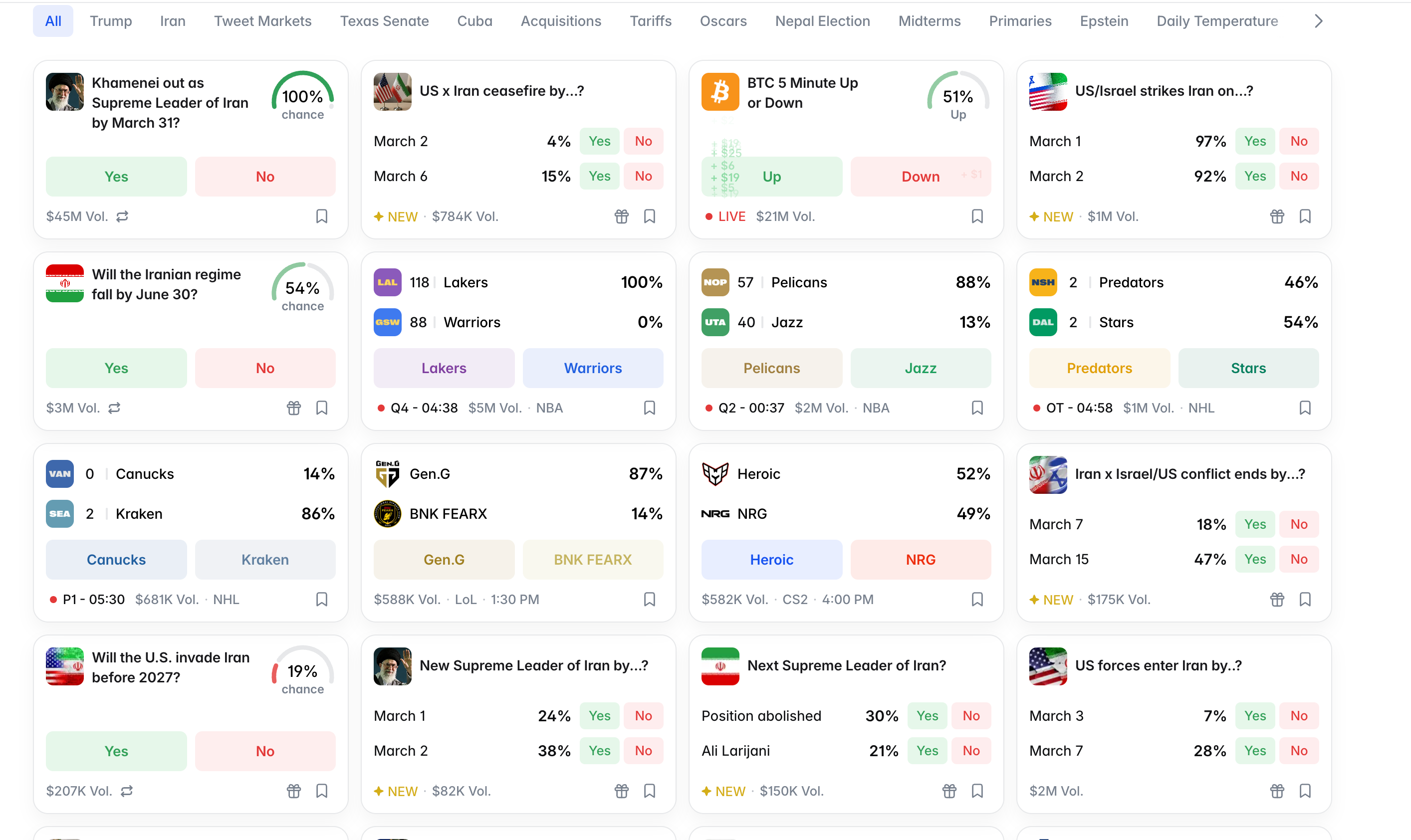
Polymarket’s largest completed market was “Will Ayatollah Khamenei step down as Iran’s Supreme Leader by March 31st?” 100% resolved after Iranian state television confirmed his death on Saturday.
The deal generated $45 million in trading volume, making it one of the busiest geopolitical markets over the past week. A top trader account called “Curseaaaaaaa” made $757,000 on “yes” bets. Four other traders each cleared six digits.
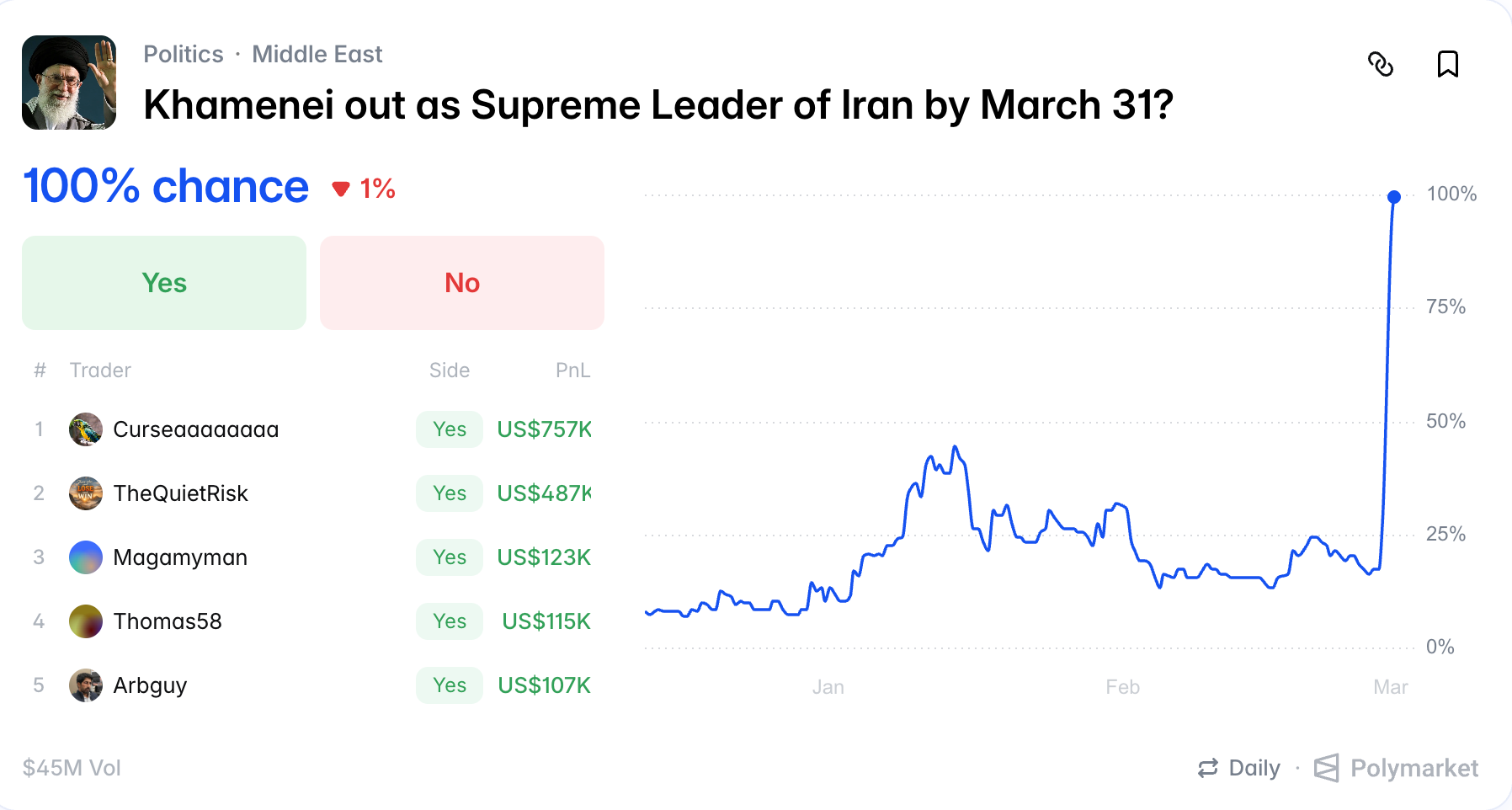
The market’s charts hovered between 25% and 50% during the heightened tensions of January and February, before spiking vertically to 100% when confirmations were received.
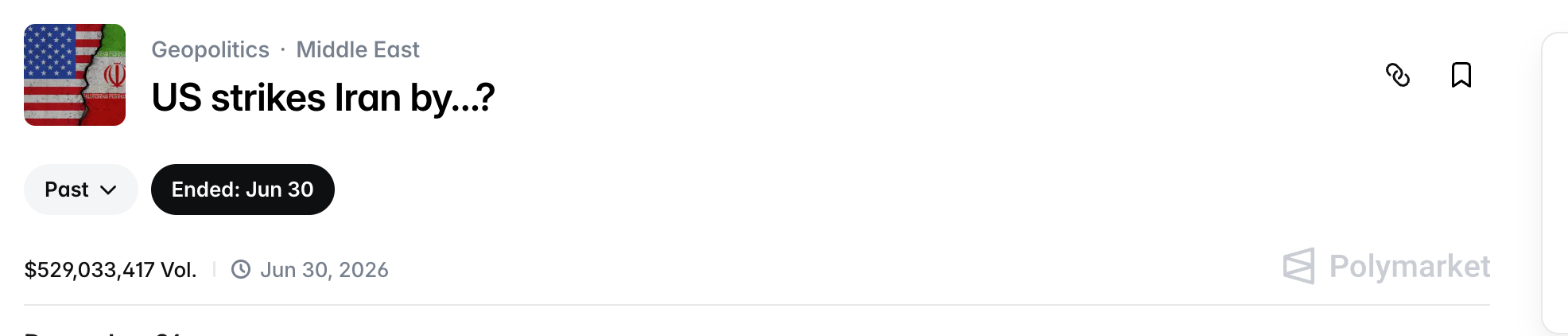
However, the biggest market is “Will the US attack Iran?” The deal began Dec. 22 and has now raised a total of $529 million, making it one of the largest single markets ever hosted by Polymarket.
The numbers make it the largest market in Polymarket’s “World” and “Geopolitics” categories by a wide margin, and fourth in the broader “Politics” category behind Trump-related contracts from the 2024 election cycle.
On February 28th alone, $89.6 million was traded. All daily contracts from February 28 to early March were voted “yes” after the air strikes began. This means that anyone who bought a specific date before the attack has come together to make a binary bet on when the U.S. military will bomb another country.
Market resolution rules were accurate. This would have required U.S. military drone, missile, and air strikes on Iranian territory and did not take into account interception, cyber attacks, or ground operations.
Trading actions are now moving to:
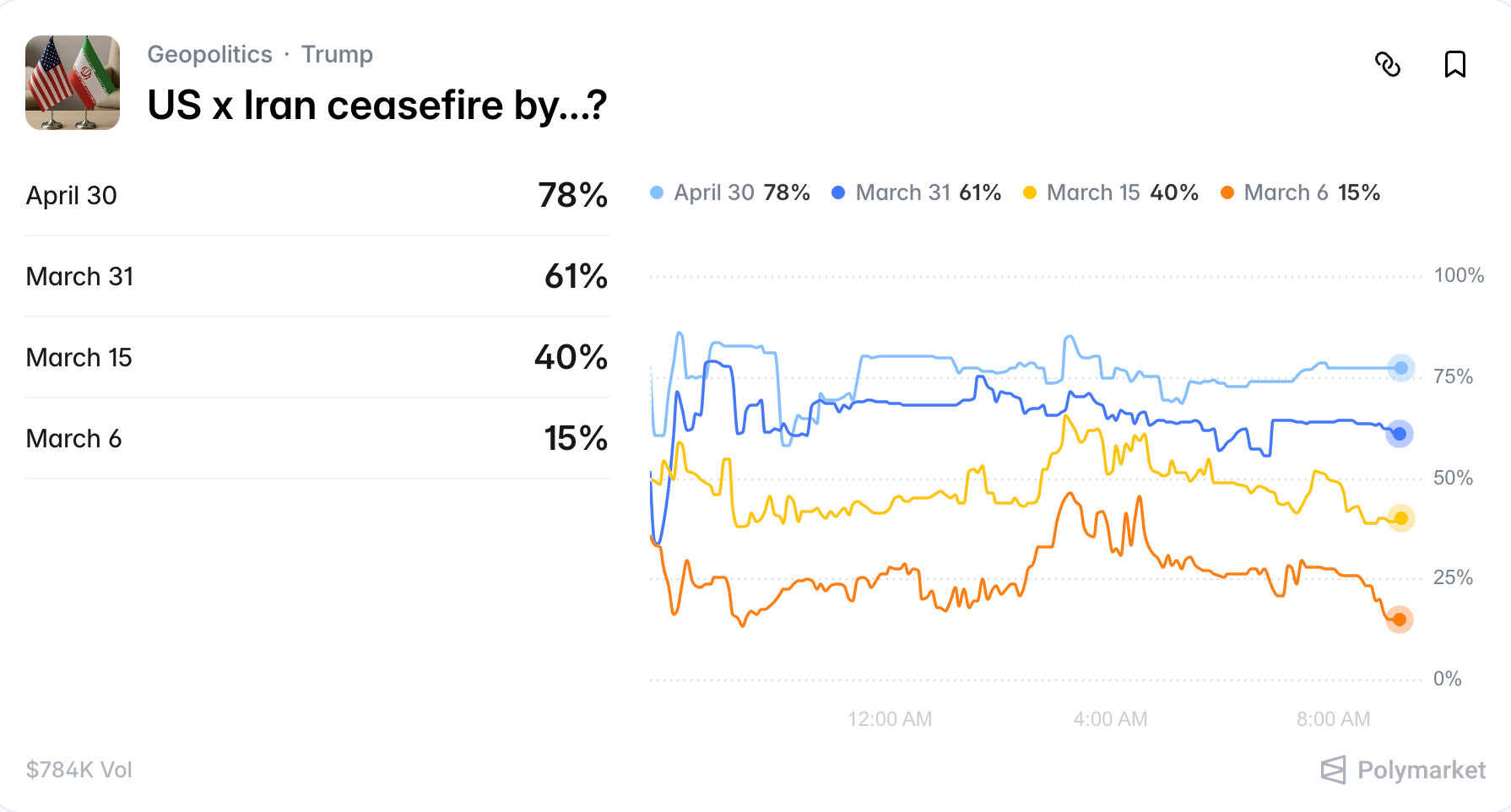
In the ceasefire market, the probability of a ceasefire between the US and Iran is only 4% by March 2nd and 15% by March 6th, but jumps to 61% by March 31st and 78% by April 30th. Bettors are pricing in a resolution within weeks rather than months, consistent with Bitcoin’s rally to $68,000 based on the same theory.
“Will the Iranian regime collapse by June 30th?” remained at 54%, a sharp jump from the low 20% range it had been trading in for several months. The “Next Supreme Leader of Iran” market has a 30% chance that “the position will be completely abolished,” meaning that bettors have an almost 1 in 3 chance of seeing the theocratic structure itself not survive. Former parliament speaker Ali Larijani leads the nominees with 21%.
Ground invasion contracts are also driving up actual transaction volumes. “Will the United States invade Iran by 2027?” “U.S. forces will enter Iran by March 7th” was 28%, with transactions amounting to $2 million, while 19% had transactions amounting to $207,000.
What polymarkets are doing here is something that traditional markets cannot do structurally or legally. Although stock and oil futures trading will not resume until Sunday evening, Polymarket allows anyone with a crypto wallet to take positions on regime change in Iran over the weekend and see real-time pricing from thousands of other participants doing the same.
However, the most notable activity may have occurred before the first missile hit.
On-chain analytics firm Bubble Maps on Saturday identified six wallets that had made a total of $1.2 million in profits betting on a U.S. attack on Iran through February 28, the exact day the attack took place.
Most of the wallets were funded within 24 hours of the attack, betting specifically on the February 28 contract rather than the broader period, and buying “Yes” stocks hours before the start of the military operation. The largest single wallet turned about $61,000 into more than $493,000 in profit. The second earned about $120,000 from a $30,000 position.
Meanwhile, the platform recognizes the optics.
Polymarket added a note to Middle East Markets on Sunday: “The promise of prediction markets is to harness the wisdom of crowds to create accurate, unbiased predictions about the events that matter most to society.” He further claimed that after speaking with people directly affected by the attack, he found that prediction markets “can give them the answers they need in a way that TV news and X couldn’t.”
The site has also created a dedicated section for markets focused on Iran.
Updated (March 1, 2026, 06:30 UTC): Add additional details.
Updated (March 1, 2026, 07:15 UTC): It added that Polymarket’s bet set a new record for the platform.