









Spot ETFs have received a lot of attention from institutional investors, but the release of the Bitcoin ETF and lack of bullish performance has many wondering why this asset is still struggling below key levels. The cause is not a single company or invisible player manipulating the market. Rather, it comes down to how an ETF’s structure changes how it is priced.
Can institutions support Bitcoin?
The Authorized Participant (AP) system is at the heart of the conversation. The ETF’s price is kept in line with Bitcoin’s underlying value through liquidity provided by major financial institutions such as Jane Street and JPMorgan. They exist to maintain efficiency, not to raise prices. This distinction is important. As a market maker and arbitrageur, AP prioritizes risk management over making bullish bets on Bitcoin’s long-term trajectory.
Demand for ETFs does not necessarily lead to direct spot purchases of Bitcoin, but this is the main structural change. Conventional wisdom suggests that institutional purchases of Bitcoin in the open market will be forced by ETF inflows, driving the price higher.
In fact, APs’ use of futures markets and other related instruments to hedge their exposures can reduce the need for quick spot purchases. Demand that may have previously caused severe supply constraints is now being absorbed across multiple financial tiers.
supply issues
This phenomenon erodes the feedback loop that has historically driven Bitcoin’s incredible rally. Exposure can be artificially generated by buyers rather than chasing limited supply on exchanges.
As the futures market absorbs the pressure, the price reaction becomes smoother. This system reduces the ferocity of price discovery, rather than suppressing Bitcoin completely.
This effect is enhanced by the mechanism of in-kind creation and redemption. Financial institutions can gradually raise Bitcoin through over-the-counter channels, rather than triggering a noticeable spike in the exchange rate. This eliminates the sudden shocks that once caused vertical movements and gradually distributes the buying pressure.
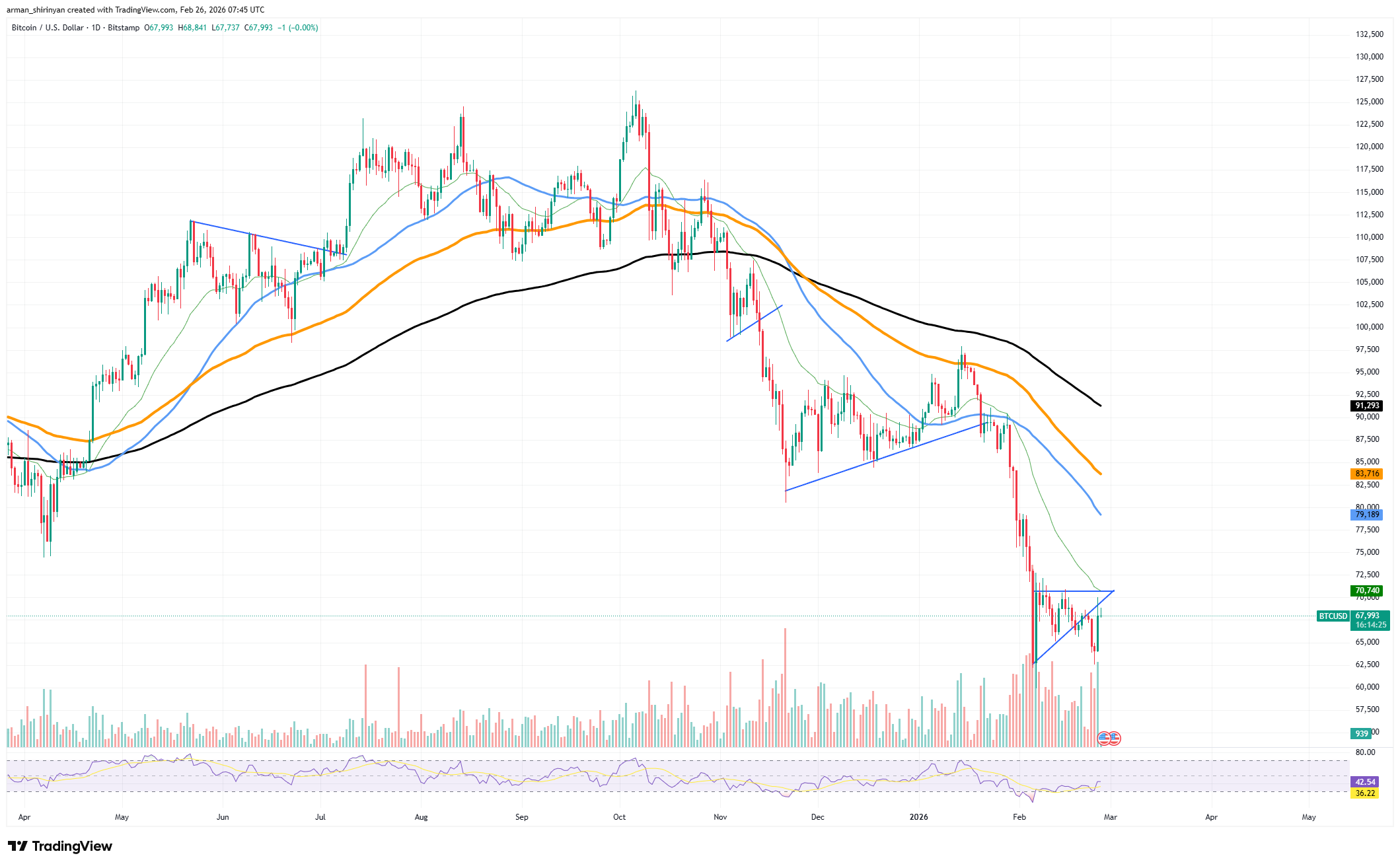
Bitcoin is still technically unstable, but from a market perspective there are currently signs of stabilization. Buyers appear to be trying to defend key zones based on recent attempts to hold support, but the overall trend still indicates caution rather than renewed momentum.