









According to tracking by the Treasury Department, the U.S. federal debt topped $38 trillion on January 3, 2026. The new milestone was reached as parts of the crypto community celebrated Genesis Day, the anniversary of Bitcoin’s first block. The timing reportedly attracted attention because it highlighted the contrast between public borrowing and the fixed supply of Bitcoin.
debt reaches its highest value
The total federal debt exceeded $38 trillion on January 3, according to Treasury statistics. The increase has been rapid over the past two years, from about $34 trillion at the beginning of 2024 to about $36 trillion by the end of 2024 and $38.5 trillion by the end of 2025.
Analysts estimate that debt has recently increased by about $6 billion a day, a pace that is increasing interest costs and narrowing future budget options. Part of the increase is due to continued budget shortfalls where spending exceeds revenue.
On January 3, 2009, the Bitcoin network was launched with the mining of the first block, known as the Genesis block.
Embedded in that block was the following heading @TheTimes newspaper:
“The Chancellor is on the brink of a second bailout of banks.”
This message forever proves the origin of Bitcoin… pic.twitter.com/hGozJOYd3I
— UK Bitcoin Policy (@bitcoinpolicyuk) January 3, 2026
Factors behind the surge
According to market reports, several factors are behind this surge, including persistent annual deficits, increased interest payments on existing debt, and large spending bills recently passed by Congress.
The key figure is the sum of debt owed by the public and debt owed to federal trust funds. Economists warn that as the debt grows relative to the size of the economy, more taxpayers will be needed just to cover the interest payments, and other priorities may take precedence.
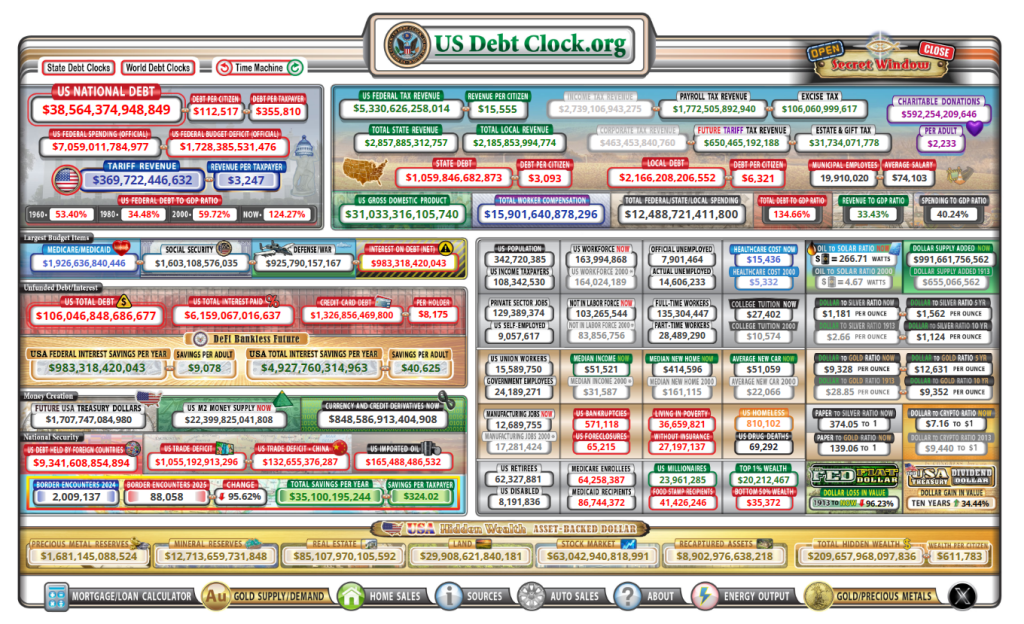
A dashboard showing the US government debt, now over $38 trillion and climbing. Source: US Debt Clock
Bitcoin community reaction
On January 3, many Bitcoin supporters celebrated Genesis Day, which many Bitcoin supporters consider a symbolic day in the financial revolution when the first block of Bitcoin was mined in 2009. Some users posted about the contrast between the ever-increasing national debt and Bitcoin’s supply cap of 21 million coins.
Some used the anniversary to raise broader questions about fiscal rules and the money supply. Reactions were mixed. Some see this as a warning, while others see it as a commemorative moment.
Investors and commentators are weighing the implications. Some in the market are treating rare assets like Bitcoin and gold as a hedge against what they see as the risks of borrowing too much money.
At the same time, mainstream economists warn that large and persistent deficits could raise borrowing costs and slow growth in the long run. Treasury authorities closely monitor cash needs and may change borrowing schedules to cover gaps between income and expenditures.
Featured image from Unsplash, chart from TradingView
editing process for is focused on providing thoroughly researched, accurate, and unbiased content. We adhere to strict sourcing standards, and each page is carefully reviewed by our team of top technology experts and experienced editors. This process ensures the integrity, relevance, and value of your content to your readers.