









ETH is trading near fair value territory after recovering to just over $3,000. ETH remained active and speculative compared to BTC, but still showed no signs of excitement.
The ratio of ETH realized price to market value/realized value indicates the fair value of the asset at the end of November. ETH is trading at $3,053.19 and has been sideways for the past few days.
The realized price is $2,315 and the MVRV ratio is 1.27. This means that the market price is only 27% above the realized price. At this price level, ETH is neither considered overbought nor oversold and falls into the neutral category.
The fear and greed index of ETH also reflects neutrality, its value is 49 points. Current levels do not guarantee future price movements. ETH is not overheating at the moment and has not shown any local tops historically. However, the market remains at risk of correction due to reduced liquidity and expectations of selling pressure.
ETH is looking forward to the Fusaka update on December 3rd, but lacks hype in other directions. The ETH network has recorded peak activity, but as in previous seasons, it does not directly reflect growth. The current price range continues without the hype of altcoin season. ETH is showing mid-cycle indicators with no clear upside signal, although further sideways trading or unexpected moves are possible.
Is ETH changing the market structure?
Binance data measures a slightly different MVRV ratio of just below 1. This threshold may indicate a change in investor behavior. If this ratio is below 1, it could indicate a regional bottom, but it could also indicate price weakness or a sideways trade.
Historically, an MVRV ratio above 3 indicates more exuberance and overbought conditions. A value less than 1 means the investor has unrealized losses.
Whales are also actively trying to lower the acquisition price, so ETH has the advantage of being able to accumulate over many years.
ETH exchange reserves are decreasing
Exchanges’ ETH reserves are at an all-time low, indicating they are hardly ready for spot selling. ETH relies on derivatives trading, which has accelerated in recent days.
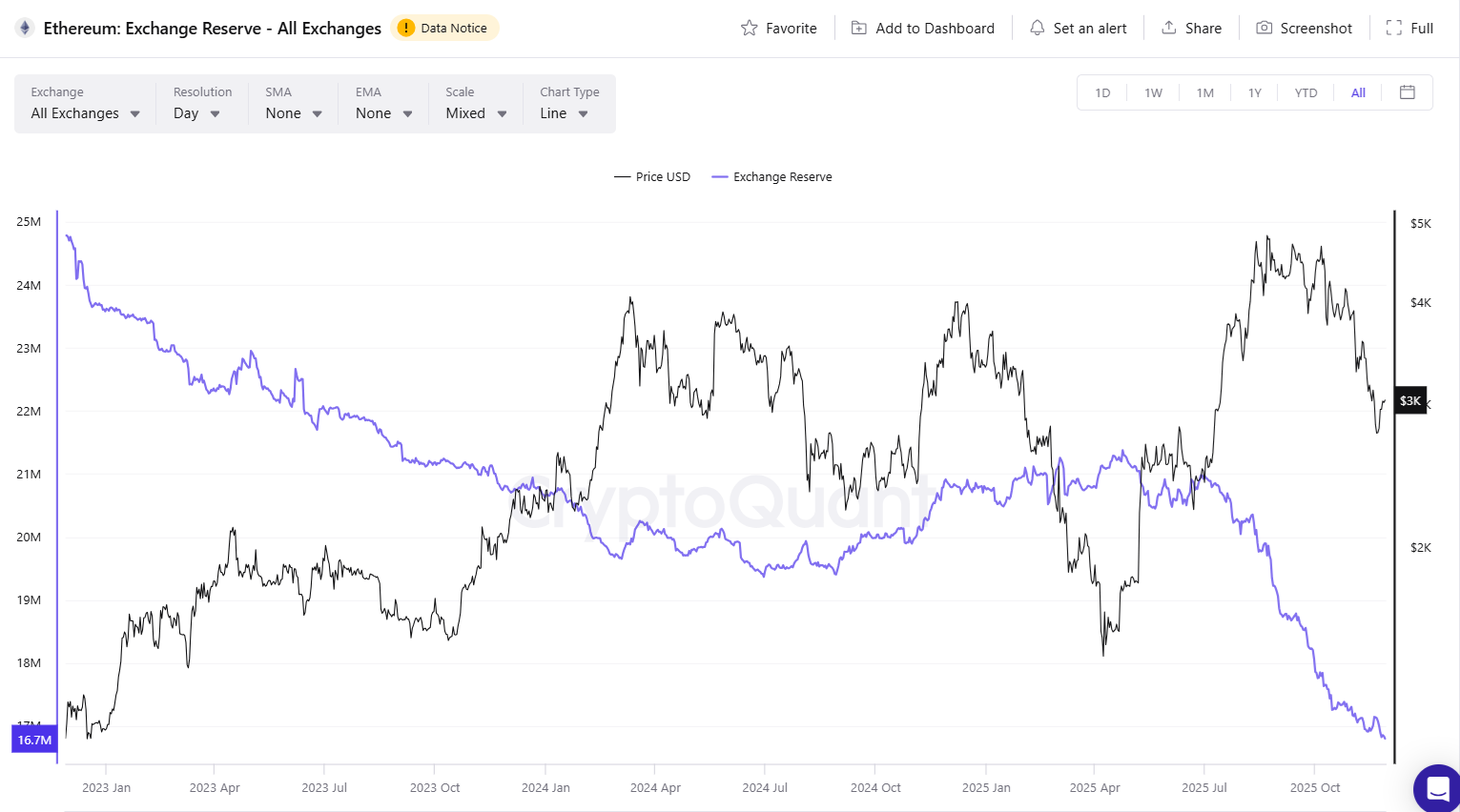
ETH foreign exchange reserves continue to hit new all-time lows as holders move to lending, staking, or DeFi. |Source: Cryptocurrency
Long-term holders and whales also prefer to keep their coins for staking or use them in DAT companies. Transactions are moving to wrapped tokens, and ETH is widely used as collateral for loans. All of this reduces the need to put your ETH directly on a centralized exchange.
Binance holds approximately 3.87 million ETH, while the exchange holds 16 million ETH, down from 20 million in July. At the same time, ETH is moving to accumulation wallets and some is sent to Beacon Chain contracts for staking.